Localising the Sustainable Development Goals 5 Sections25 LessonsLifetime
Module 4. Monitor and evaluate progress
Voluntary Local Reviews
One way that local governments can monitor the progress toward the SDGs is by conducting Voluntary Local Reviews. These assessments can be used to identify areas where progress is being made and areas where additional efforts are needed.
The global movement of Voluntary Local Reviews (VLRs) is growing fast. Cities, local and regional governments worldwide are using VLRs to track and report on progress toward the SDGs. A VLR can stand on its own or complement and contribute to Voluntary National Review (which states submit to the UN on a regular basis) by ensuring a more detailed and nuanced assessment of progress toward implementing the 2030 Agenda. A VLR can be made on all the goals, or go deeper into one specific SDG or even target, depending on the objectives of the local government. It is an opportunity for local governments to engage with their communities and stakeholders to gather input and feedback on their progress towards the SDGs, and to further develop their strategies and plans for achieving the goals.
VLRs can also be catalysts for breaking down administrative silos, exposing how a single problem can be approached differently from multiple areas of policy-making. This can extend bridges across departments that conventionally have been reluctant to pursue dialogue and exchange within the local government.
Undertaking a VLR can benefit a local government by:
- evaluating and monitoring progress
- demonstrating political commitment
- enabling civic participation
- identifying priority areas for local sustainable action.
If you are interested, read more about them here: https://sdgs.un.org/topics/voluntary-local-reviews. You will also be exposed to a VLR case study in the next section.
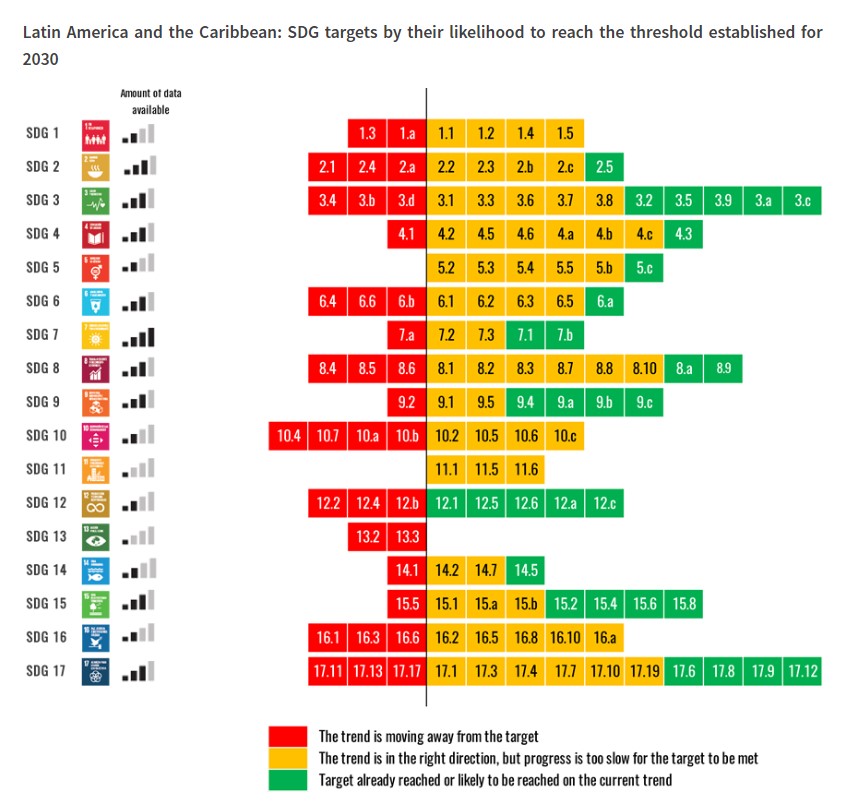
Here is an aggregated analysis of voluntary national and local reviews in Latin America and the Caribbean, illustrating how reviews can help identify priority areas. (image source)
Participatory monitoring: community ownership of the SDG process
There is no set framework for how to conduct a VLR or what type of data to use. In an emerging practice to use community researchers in the VLR process, actors are bringing in grassroot voices to shape both the priorities of the VLR – what SDGS are the most crucial to review? Do their priorities align with the official information and priorities from the local government? – and the implementation – do people share the perceptions of progress and gaps? How are they part of forming the agenda?. This comes with an empowerment process of raising awareness of the SDGs and leveraging community voices. There is also a local ownership agenda in participatory monitoring that is important to local governments: unless local voices inform the policy design, will measures be well received, accepted and used?