Skip to content

Main Navigation

ICLD
  • Home
  • Online courses
  • My Page
  • Login
  • Home
  • Online courses
  • ICLD core course

Localising the Sustainable Development Goals

Curriculum

  • 5 Sections
  • 25 Lessons
  • Lifetime
Expand all sectionsCollapse all sections
  • Module 1. Overview of SDG Localisation
    5
    • 1.1
      Welcome
    • 1.2
      What are the SDGs and why are they important?
    • 1.3
      What is SDG Localisation?
    • 1.4
      How is it done?
    • 1.5
      Module reflection and facilitation
  • Module 2. ICLD's priority SDGs
    7
    • 2.1
      ICLD’s priority SDGs
    • 2.2
      SDG 5 – Advance Gender Equality
    • 2.3
      SDG 10 – Reduced Inequalities
    • 2.4
      SDG 11 – Sustainable Cities
    • 2.5
      SDG 16 – Peace, Justice and Strong Institutions
    • 2.6
      SDG 17 – Partnership for the Goals
    • 2.7
      Module reflection and facilitation
  • Module 3. Mainstreaming the SDGs
    6
    • 3.1
      Mainstreaming the SDGs
    • 3.2
      Using indicators and disaggregated data
    • 3.3
      Engaging stakeholders
    • 3.4
      SDGs and Human Rights
    • 3.5
      Example tool: SDG Impact Assessment
    • 3.6
      Module reflection and facilitation
  • Module 4. Monitor and evaluate progress
    4
    • 4.1
      Monitor progress
    • 4.2
      Voluntary Local Reviews
    • 4.3
      Case Studies: Bonn, Pereira and 4 Swedish cities
    • 4.4
      Good job!
  • Module 5. The SDGs and your ICLD project
    3
    • 5.1
      Problem oriented project planning, PART 1
    • 5.2
      Problem oriented project planning, PART 2
    • 5.3
      How to strengthen peer-to-peer learning on the SDGs in your municipal partnership or network

Module 5. The SDGs and your ICLD project

How to strengthen peer-to-peer learning on the SDGs in your municipal partnership or network

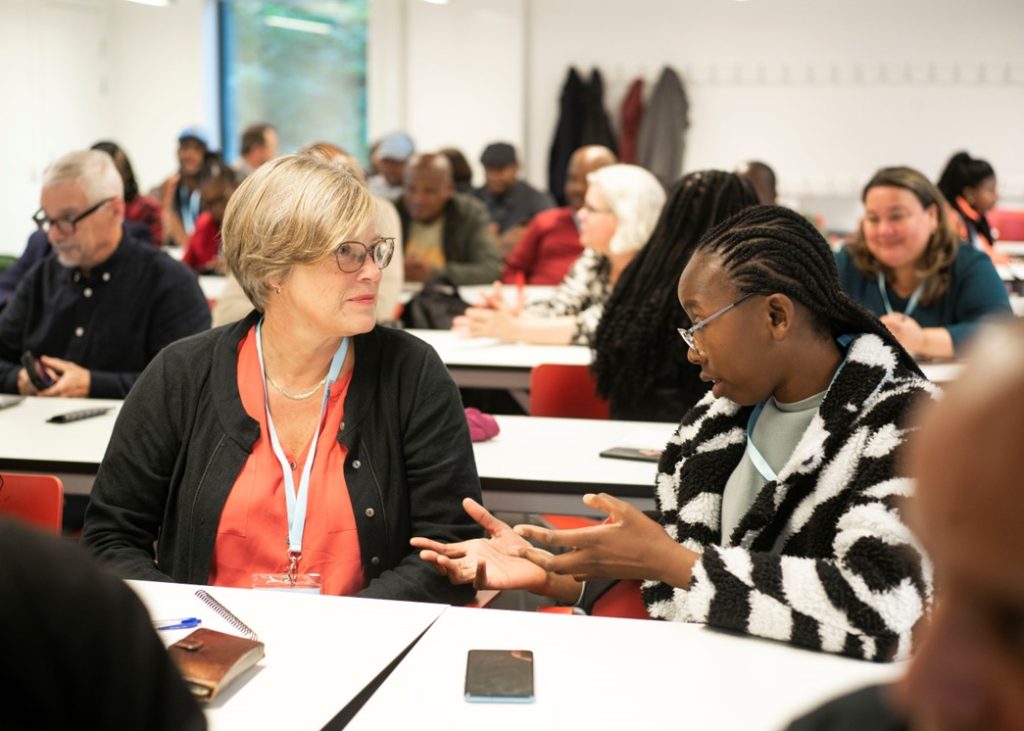
The objective of peer-learning in ICLD networks (including team visits) and partnerships is the transfer of knowledge, skills and experience from one local government to another, and vice versa, mainly through international visits. These visits are at the heart of your partnership, and network, and should be well planned and contain elements that encourage peer learning, friendly benchmarking to inspire change, or other forms of peer support such as mentoring, site/study visits, peer visits, peer assessments and work shadowing.
ICLD Peer learning in partnerships – toolbox

ICLD has put together a toolbox for peer-to-peer learning in your partnerships. If your partnership has decided to focus on specific SDGs or mainstreaming them through your projects, we suggest you conduct the following peer learning methods during your international visits:

  • Structured peer assessments (Method 1 in the toolbox)
  • Study visits (Method 2 in the toolbox)

Focus these methods on your local government’s work with SDG mainstreaming or on specific SDGs.

Problem oriented project planning, PART 2
Prev
Proudly powered by WordPress | Theme by: WP_Byrån.
Cookies
We serve cookies. If you think that's ok, just click "Accept all". You can also choose what kind of cookies you want by clicking "Settings". Read our cookie policy
Settings Accept all
Cookies
Choose what kind of cookies to accept. Your choice will be saved for one year. Read our cookie policy
  • Necessary
    These cookies are not optional. They are needed for the website to function.
  • Statistics
    In order for us to improve the website's functionality and structure, based on how the website is used.
  • Experience
    In order for our website to perform as well as possible during your visit. If you refuse these cookies, some functionality will disappear from the website.
  • Marketing
    By sharing your interests and behavior as you visit our site, you increase the chance of seeing personalized content and offers.
Save Accept all