Localising the Sustainable Development Goals 5 Sections25 LessonsLifetime
Module 3. Mainstreaming the SDGs
Mainstreaming the SDGs
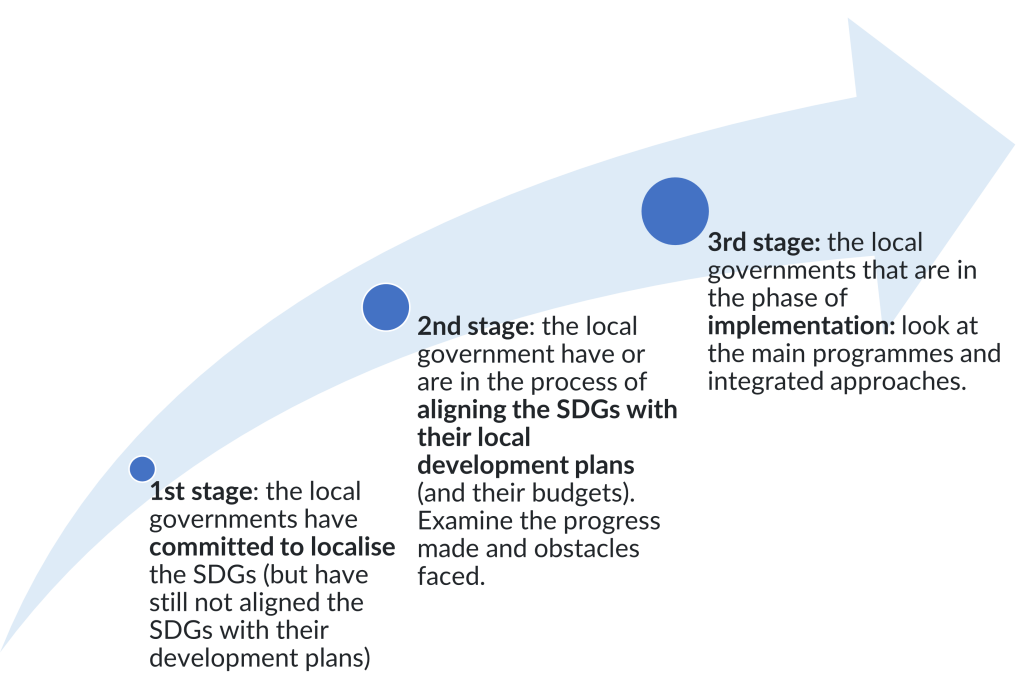
Local governments often implement initiatives related to the SDGs (e.g. better access to public services, access to energy, strengthen urban planning, climate change actions plan) even if they do not refer to these initiatives as “SDGs”. This is positive, but the strength of the Agenda is greatest when it is mainstreamed across departments. This means all strategies and plans are reviewed through the lens of the SDGs. In a mapping exercise of the progress made by local governments in the mainstreaming of the SDGs, it is possible to acknowledge three levels of progress:
Needs assessment
A needs assessment can help identify the specific challenges and opportunities in a particular region or community, and inform the development of a local SDG action plan. This can involve collecting data, consulting with local stakeholders, and conducting focus group discussions or surveys. Based on the results of the needs assessment, a local SDG action plan can be developed to outline specific actions and strategies for achieving the SDGs in the local context. The plan should include targets, indicators, and milestones for tracking progress. The coming sections give some advise for creating and implementing a plan.