Module 1: Introduction to Gender Equality
Module Reflection and facilitation
What do we really know about each other?
What happens when we base our ideas of people on their appearances, and what happens when those ideas are challenged? Take a couple of minutes – on your own or with your colleagues – to watch this short video All That We Share, that a Danish TV channel made.
Reflect on your own or discuss with your colleagues:
How did watching this video make you feel?
Is it common to make quick judgements based on prejudice?
Is there anything you would change in this video?
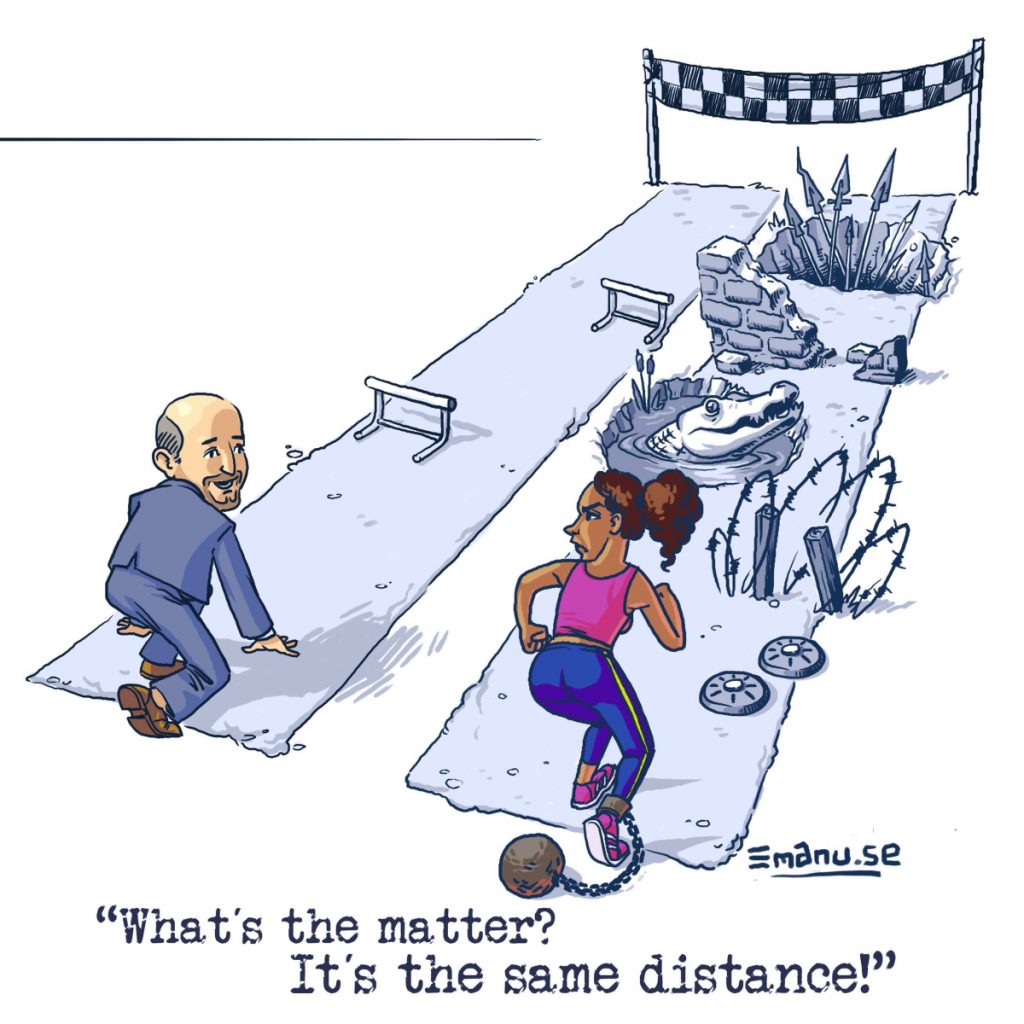
Exercise: Check your privilege
All people in society are affected by norms and power. One way to see power in everyday situations can be to make visible the privileges and advantages assigned to those who belong to the norm in different ways. As a local government official, becoming aware of your own relationship to norms, power, and privileges, can make it easier to understand your own role in the practical work for equal rights. The Privilege Test, as we refer to it, is an adapted version of the Teflon Test, a self-assessment tool created by Louise Andersson in 2004. This version is adapted by Uppsala Antidiscrimination Office on behalf of ICLD. You can do the exercise completely on your own, or do the last part together with your colleagues.
Instructions:
- Download the worksheet by clicking the button to the right. You can print it or fill it in on the computer.
- Reflect quietly to yourself about your own relationship to the categories in the chart.
- When filling out the worksheet you respond to the question:
How often do I experience friction, collision or resistance due to other people’s beliefs or expectations on me related to the categories in the list?
Important note: This tool is for self-reflection and is not intended for the user to show or compare results with anyone else.
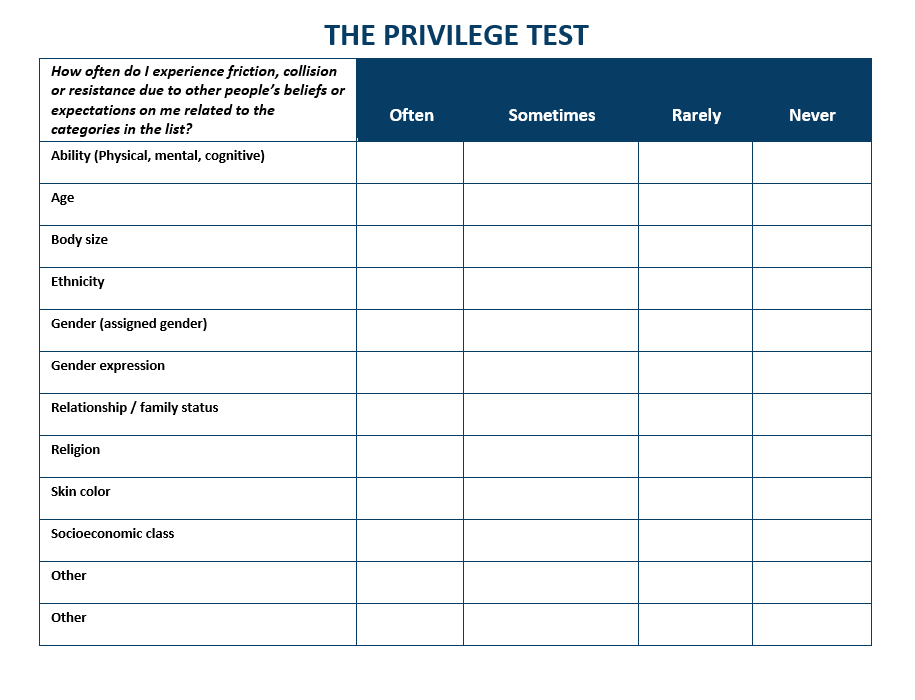
Examples of friction may include:
- Worry and stress concerning a deadline because my reading and writing is affected by dyslexia.
- Having lower pay than my colleagues because I am a woman
- Being denied a job because of my skin color or ethnic origin.
- Being denied a promotion because of my disability.
- Not being listened to or taken seriously in discussions because of my young or old age.
- Worrying about walking home alone at dark because I’m a woman.
- Being exposed to violence because of my faith.
- Being stared at during meetings or social events because of my gender expression.
- Being degraded by jokes and humiliation because of my body size.
- Being held accountable as a representative of a certain faith when acts of crimes are made by someone of the same religious beliefs as I.
- Worry and stress before and during travelling because of my ethnic origin.
- Without consent being appointed as a spokesperson of a certain group by others.
Ask yourself:
- In which situations do I benefit from being a part of the norm?
- In which situations do I get disadvantages for not being a part of the norm?
Reflect on your own or together with your colleagues:
- How might the answers vary in different contexts, periods of life or situations (for example: privately among friends or at your place of work)?
- How can you use insights about your own relation to norms and privileges in a constructive way?
- How is this tool useful for your organisation?
- What impact can these insights have when implementing your change projects/process?